
Waste Equity Law cuts trail in four Bronx, Brooklyn and Queens districts
Sanitation Commissioner Gregory Anderson said the 2018 law is fully implemented as written, with exemptions for recycling, organics and rail export.
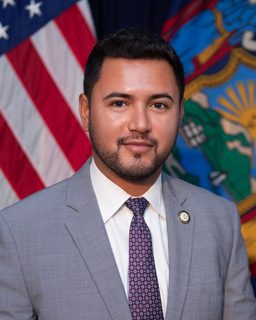
None of the four community districts singled out by New York City’s Waste Equity Law has reached the cut in garbage-transfer capacity the law requires, the chair of the City Council’s sanitation committee said at an Oct. 15 oversight hearing, according to a review of the hearing record by NYC Politics.
Sanitation Commissioner Gregory Anderson told the Committee on Sanitation and Solid Waste Management that the law “has been fully implemented.” He said the gap comes from exemptions written into the law for recycling, organic waste and stations that ship waste by rail.
Support for NYC Politics comes from our sponsors
The 2018 law, Local Law 152, ordered permitted capacity at private waste transfer stations cut by 50% in Brooklyn Community District 1 and by 33% in Queens Community District 12 and Bronx Community Districts 1 and 2. Transfer stations are where collection trucks unload so waste can move on by other means, Anderson said.
The committee chair, Council Member Justin E. Sanchez, represents District 17. He said Bronx Community Districts 1 and 2 face disproportionate health hazards from that infrastructure, including asthma.
The hearing set two readings of the law side by side. Sanchez said about 74% of citywide transfer-station throughput remains in the four districts. The department said the law worked as written.
“We’ve achieved total compliance with the law as it was written.”
Sanchez asked why the four districts were not first in line for the department’s on-street trash container program. “Why weren’t these districts prioritized over other districts that didn’t need it as much as we did?” he said.
Support for NYC Politics comes from our sponsors
How far short are the districts?
Citywide, transfer-station volume is about 16,083 tons a day, down 15% since the law passed, Sanchez said, citing the department’s latest annual report.
By the chair’s figures, Brooklyn Community District 1 is at a 35.8% reduction against its 50% target. Queens Community District 12 is down 23.9% and Bronx Community District 1 is down 14.8%, against targets of 33%.
Sanchez said he was worried the cuts mostly hit unused capacity, and that two stations appear to have had no reduction.
Anderson said the law sets aside exempt capacity first, cuts the rest by 33% or 50%, then adds the exempt amount back. Asked whether the cuts hit unused capacity, he said, “It’s a mix of both.”
Support for NYC Politics comes from our sponsors
He said the two Waste Management facilities with no cuts export nearly all their waste by rail, which the law exempts.
The Metropolitan Transfer Station in the Bronx received a capacity increase in 2025 after adding 111 tons a day for organic waste, Anderson said.
Sanchez said throughput has fallen mainly outside the four districts since 2019. Anderson said he was not sure he saw that trend but would “dig into the data” with the committee.
Why the department says it can’t do more
Anderson said citywide throughput fell partly because waste that once moved through city stations now goes to Westchester County or New Jersey.
Support for NYC Politics comes from our sponsors
He said moving capacity elsewhere in the city would take rezoning land for industry and opening new stations. “I think it will be very difficult to meaningfully relocate transfer capacity out of those four districts and into other parts of the City,” he said.
“The best we could do is just shift the burden elsewhere on to environmental justice neighborhoods outside of New York City,” Anderson said.
He said throughput fell about as much as the department’s environmental review predicted.
He pointed to commercial waste zones, a 2019 overhaul of private trash hauling, which he said will cut truck traffic tied to commercial collection by 63%. Six zones are running, with full rollout due at the end of next year. “That doesn’t mean that we have stopped working toward additional waste equity,” he said.
Support for NYC Politics comes from our sponsors
On containers, Anderson said Bronx Community District 2 is among the first districts to get the large shared bins, and every district will have full trash containerization by the end of 2031. Asked to commit to the other three districts next, he said, “We’ll certainly take a look at it. We will follow back up on that.”
What residents and advocates said
A senior resiliency planner at the New York City Environmental Justice Alliance said communities of color have had to deal with “far more than their fair share of heavy truck traffic.”
Eric Goldstein of the Natural Resources Defense Council said “private waste transfer stations located predominantly in north Brooklyn, the South Bronx and southeast Queens continue to pose environmental problems.”
He said a 2006 promise to use the city’s marine transfer stations for commercial waste “remains unfulfilled,” and he and others urged passage of a bill from Council Member Sandy Nurse to require it. Anderson said the department will do so once commercial waste zones are complete, if it can overcome financial obstacles.
Support for NYC Politics comes from our sponsors
A youth organizer whose family has lived in the Melrose neighborhood of the South Bronx for more than 20 years described asthma in the family, including a Christmas spent in the hospital.
The just transition coordinator at UPROSE, a Sunset Park group, said about 75% of privately managed waste moves through five community districts, Sunset Park’s among them, and that the system “remains grossly unfair.”
What about the bills?
Int. 1041, from Council Member Ty Hankerson, who represents District 28 in southeast Queens, would bar removing litter baskets solely over illegal dumping. Removals mean “entire neighborhoods of thousands of residents are being punished for the actions of a few bad actors,” Hankerson said.
Anderson said he ended the practice when he became commissioner on March 30, telling his team, “absolutely not. We are not doing that anymore.” Still, he said, “it is critical that we retain this tool as an option of last resort.”
Support for NYC Politics comes from our sponsors
On Council Member Lincoln Restler’s bill for 25 public compost bins per district, Anderson said, “we cannot support this bill at this time,” citing falling use. He said requiring bins at all city buildings would divert resources from residential containers.
What happens next?
No votes were taken. Anderson agreed to give the committee the exemptions granted to stations in the four districts and to check whether any station ran above 90% of its permitted capacity.
The committee accepted written testimony for 72 hours after the hearing.
The marine-transfer plan waits on the end of the commercial waste zone rollout, a date Anderson said “seemed very far away but is now 15 months, which is not that far.”