
NYC e-bike safety bills split delivery workers and crash victims at Council hearing
Delivery workers warned of more police stops and seized bikes, while people hurt in crashes urged plates for e-bikes under Priscilla’s Law.
Delivery workers and people hurt in e-bike crashes took opposite sides on Sept. 30 as a New York City Council committee heard hours of public testimony on a package of e-bike and micromobility safety bills. No votes were taken, according to a review of the hearing recording by NYC Politics.
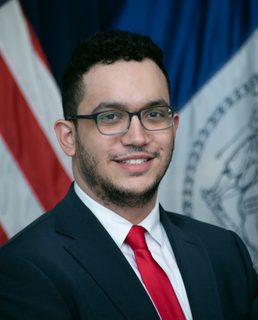
The Committee on Transportation and Infrastructure is chaired by Majority Leader Shaun Abreu, who represents District 7 in Manhattan. One witness called the session a “nearly 30 bill hearing.”
Support for NYC Politics comes from our sponsors
The recording begins as the committee resumed public testimony. It does not include the administration’s testimony or members’ questions from earlier in the day.
The split leaves the committee weighing two competing ideas of street safety. Delivery workers said the bills would bring more police stops, seized bikes and more power for app companies, and asked for bike lanes instead. People hurt in crashes said riders cannot be held accountable unless e-bikes carry plates.
“We are workers supporting our families.”
Debbie Farley of the Vehicle Safety Alliance urged passage of Priscilla’s Law, Intro. 802. Farley said the bill “requires the vehicles to be registered with the New York City department of transportation and to display a visible, identifiable license plate.”
What would the bills do?
Intro. 244, which a witness said is sponsored by Council Member Crystal Hudson of District 35, would limit the sale and rental of class three e-bikes, which can reach 25 mph with motor assistance.
Support for NYC Politics comes from our sponsors
A remote witness who backed it said the bill “does not take existing bikes away from workers.” The witness cited a Bellevue study of 914 patients with micromobility injuries that found one-third had traumatic brain injuries.
Michael White, a remote witness, opposed Intro. 244 and Intro. 988 and said class three e-bikes should be licensed, registered and plated instead.
A preconsidered bill, numbered 2590 in testimony, would require sidewalk-riding detection technology on shared scooters. A New Haven traffic safety engineer, speaking personally, said GPS “geo-fencing as it exists today is not precise enough by itself to solve this problem.”
Several delivery workers said they opposed Intro. 986 and two measures they identified as 2361 and 2587. Priscilla’s Law was not among the bills heard. “Priscilla’s Law is not on the table at this hearing,” said Elita Camp, who testified remotely.
Support for NYC Politics comes from our sponsors
What delivery workers said
An organizer with the Workers Justice Project, a delivery worker for 10 years, said the testimony was also for “over 150 of my comrades who have been waiting outside today.”
“Making our streets safer requires a comprehensive approach built around dedicated infrastructure and regulation of the apps themselves,” the organizer said. “Every order being delivered by a class three bike is one not being delivered in a car or a truck.”
Charles said more police enforcement and bike confiscation would not make streets safer. Charles said a delivery company had recently agreed to pay $31 million over withheld worker pay.
Joe Dawson, a part-time delivery worker and yellow cab driver from Queens, said “the real danger is our outdated infrastructure.” Dawson also said “the apps are rushing us with their algorithms to penalize us for being even a minute late.”
Support for NYC Politics comes from our sponsors
A delivery worker from Guinea said app time limits push riders to hurry. “This is not because we want to go to drive too fast,” the worker said. Another worker said riders pay for “the bikes that serve as our life hold,” and confiscation punishes them.
A Los Deliveristas Unidos member said an app account was “completely deactivated” after the member canceled orders that did not fit in a small car. Several workers testified in Bangla, French, Fulani and Spanish.
Antonio Rosario, a Teamster for 32 years, said “the answer to a problem affecting working people should not automatically be more policing.”
What crash victims and safety advocates said
Bonnie Gerard of the Upper East Side said that in October 2023, an e-bike rider trying to beat a turning car rode onto the sidewalk and crashed into Gerard, who was waiting for the light. The crash fractured a leg and required months of physical therapy, Gerard said.
Support for NYC Politics comes from our sponsors
“I am grateful to be alive,” Gerard said. Gerard backed Priscilla’s Law and a bill to bar bikes and scooters from city parks.
Camp asked members, “How do you suggest bike riders who injure or kill others be held accountable if we don’t know who they are?”
Farley said other bills, such as higher penalties for leaving the scene of an e-scooter crash, cannot be enforced without identifying the rider. “We should not accept another preventable tragedy,” Farley said.
Steven Rogers, 80, of Chelsea, said a radar-gun study on the Hudson River Greenway found an average speed of 19.5 mph at a curve, with half of the vehicles above 20 mph. Rogers urged speed limiters hard-coded into the vehicles.
Support for NYC Politics comes from our sponsors
Roxanne Delgado, founder of Friends of Pelham Parkway in the Bronx, said underage riders on shared e-scooters endanger park users and the local precinct does not enforce the rules. A longtime cyclist said e-bikes “all have motors. They’re all motor vehicles and they should be regulated.”
Cars, apps and costs
Witnesses on both sides blamed cars and app companies. Corey Hannigan of Sunnyside, policy director at Transportation Alternatives, who testified as an individual, said “most people are killed by high speed motor vehicle drivers.”
A Brooklyn commuter who rides a class three e-bike said “cars cause well over 90% of the crashes and deaths on our streets.” A Bushwick district leader hit by cars six times asked, “When is the hearing for the car crisis?”
Richard Robbins said “the only way to solve the issue of delivery cyclists is to make the platforms accountable.” A Sunnyside community board chair, speaking as a parent, said, “let’s please target dangerous car driving and illegal vehicles.”
Support for NYC Politics comes from our sponsors
Drew Robertson, president of Atlantic Systems, proposed a “surcharge of $1 for every third party food delivery order” for a dedicated micromobility infrastructure fund. Robertson estimated it would raise $146 million a year.
The recording includes no cost estimate for the bills themselves. Kathleen Collins, who said disability organizations should help develop the rules, asked the Council to fund implementation.
What happens next?
The record does not show when the committee will vote. The presiding member pointed witnesses to a hearing on Tuesday, Oct. 27, on the city’s Vision Zero traffic safety program and the dangers posed by cars.
Collins said “protecting pedestrians and protecting delivery workers must go hand in hand.”